 THERMOStart your project
BUILDERS FIRSTSOURCE · ISSAQUAHGet a local Maximo consultation
Material performance · Heat, steam & moisture
Durability startsinside the wood.
Thermal modification uses controlled heat and steam to change how wood responds to moisture and biological decay. The result can be more stable and durable than the same species untreated, but ratings vary by species and process, and the finished assembly still needs drainage, ventilation and appropriate maintenance.
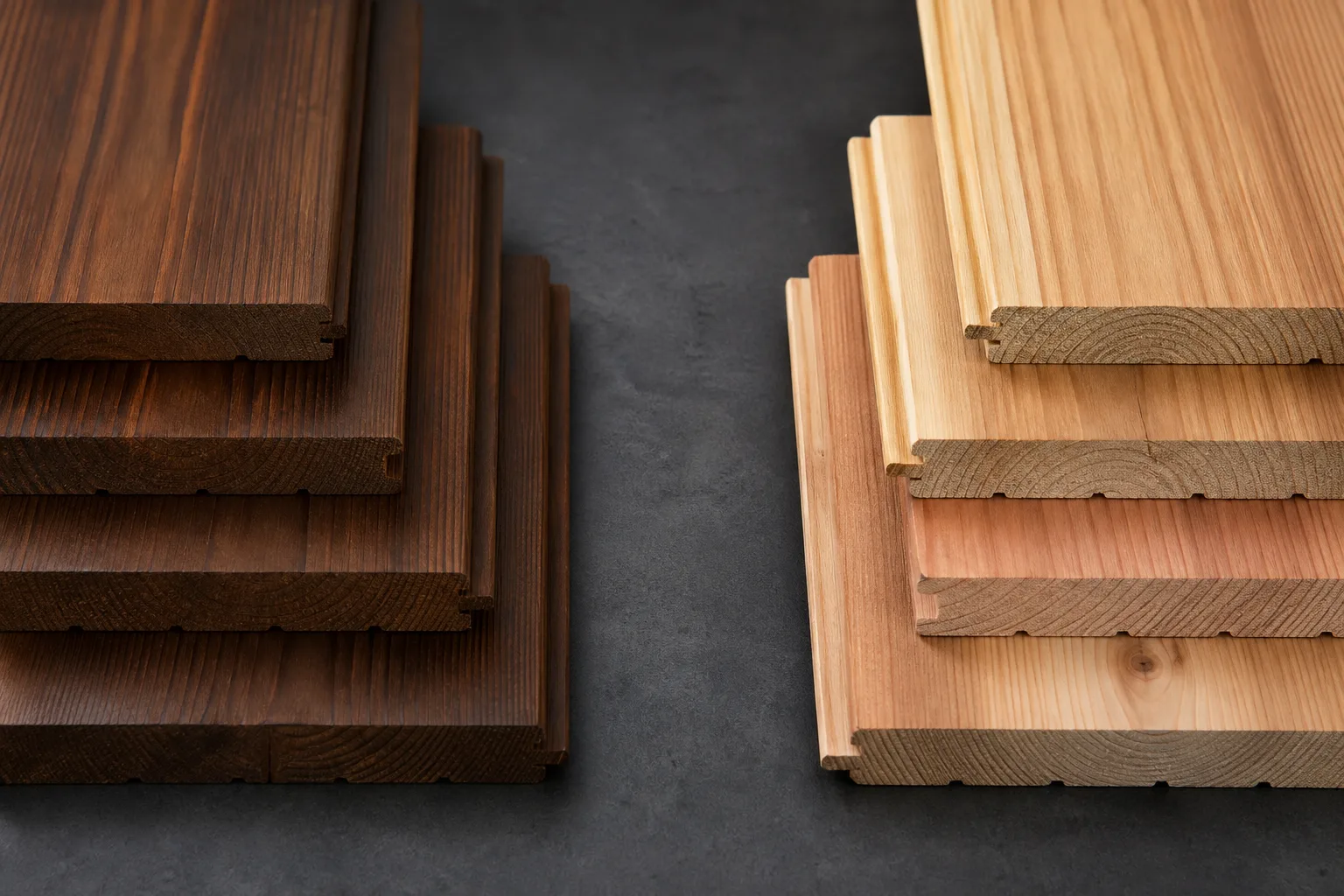
DURABILITY SCIENCEHeat · steam · lower moisture response
01
Project detail
What Heat and Steam Change
Lower moisture response and altered wood chemistry
Wood contains cellulose, hemicellulose and lignin. During thermal modification, heat changes moisture-attracting components of the cell wall and reduces the material’s ability to take up water from humid air.
Maximo describes its process as heat and steam treatment reaching up to 413.6°F (212°C), without added synthetic wood preservatives. The treatment changes the board through its cross-section rather than applying a surface-only barrier.
Lower moisture uptake and altered nutrients can make conditions less favorable for decay organisms. That improvement should be described using the documented rating for the exact product—not as immunity to rot, insects or poor detailing.
No added wood preservatives
The Maximo catalog describes a heat-and-steam process without added synthetic treatment. Coatings, adhesives and the complete assembly must still be evaluated separately for the intended use.
02
Project detail
Equilibrium Moisture & Dimensional Movement
Why lower moisture uptake can improve stability
Wood continually exchanges moisture with the surrounding air. The International ThermoWood Handbook reports lower equilibrium moisture content and reduced radial and tangential swelling after thermal modification compared with standard timber.
That reduced response can help boards remain more dimensionally predictable as humidity changes. It does not replace correct acclimation, fastener spacing, expansion allowances, drainage or ventilation.
| Material consideration | Thermally modified wood | Traditional wood |
|---|---|---|
| Moisture response | Reduced by the thermal process | Depends on species, cut, grade and conditioning |
| Dimensional movement | Typically lower than the same wood untreated | Managed through selection, acclimation and detailing |
| Durability | Use the rating documented for the exact product | Varies widely by species, heartwood, sapwood and treatment |
| Surface color outdoors | Will weather without UV-protective pigment | Will also weather unless a compatible finish is maintained |
03
Project detail
How to Read Durability Ratings
Verify the species, treatment and intended exposure
A durability class is not a universal rating for every thermally modified board. Maximo’s 2026 catalog identifies Thermo Ash as Class 1 durable and describes the broader product range as Class 1 or Class 2, depending on the product.
For specifications, request the current technical data for the exact species and profile. Keep durability class separate from structural rating, flame-spread classification, termite coverage and the conditions of the limited warranty.
04
Project detail
Comparing Modified & Traditional Wood
Look beyond the species name
Traditional woods can perform well when the specified grade, grain, heartwood content, moisture condition and finish match the application. Their performance should not be reduced to a single claim about species or forest generation.
Thermal modification offers a different route to improved stability and durability across the board. Compare the exact Maximo profile with the exact traditional material, then evaluate warranty, finish system, installation requirements, appearance and supply for the project.
Weathering preview
Natural Weathering & Silver Patina Visualizer
Select a species and move the slider to preview a possible shift from the factory brown tone toward silver gray. This is a visual aid, not a timeline or color guarantee.
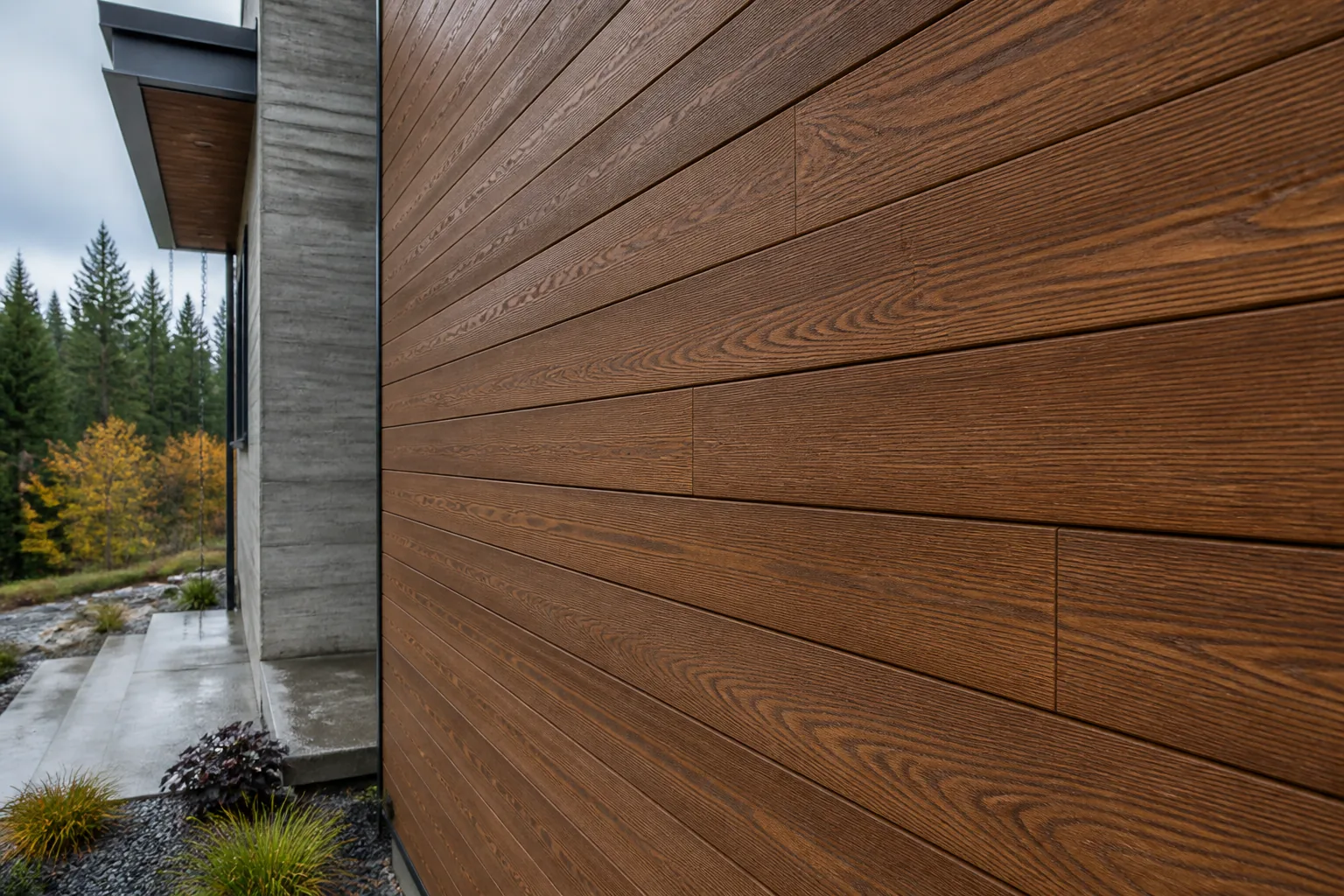
Exposure Timeline0 Months Natural Exposure
0m (Factory Fresh)3 Months6 Months12 Months18m+ (Silver Patina)
WOOD SCIENCE
Reference view of the deeper brown tone produced by high-temperature thermal modification through the board.
PROJECT NOTE
No modeled outdoor exposure at this starting point.
Keep the project moving
Choose the detail
you need next.
Where to buy in Issaquah
Builders FirstSource Issaquah
Catalog available by consultation. Contact the Issaquah team to confirm availability, sample kits, and lead time for your selected Maximo profile.
Issaquah, WA 98029
(425) 391-8000
Monday–Friday, 7:00 AM–4:00 PMDealer information verified August 31, 2026. No in-stock claim is made on this site.
Request a local quote
Put this profile
on your project.
Tell us what you are building. Our team will review your wood selection and contact you to coordinate a Maximo consultation with Builders FirstSource Issaquah.
Frequently Asked Questions
Common project
questions
Is thermally modified wood resistant to termites and carpenter ants?+
Thermal modification can make the wood less favorable to some biological attack, but it should not be presented as universal termite protection. Confirm the warranty and technical documentation for the exact product; the Maximo catalog separately identifies termite coverage for Thermo Clear Radiata OPX.
Can thermally modified wood be used in direct ground contact or submerged in water?+
Do not assume an above-ground architectural profile is suitable for soil contact or permanent submersion. Confirm the intended application and exposure limits in the current product documents before specifying it.
Does thermal modification weaken the structural load capacity of the wood?+
Heat treatment changes mechanical properties, and architectural Maximo profiles should not be assumed to carry structural loads. Structural use requires product-specific engineering values and approval from the project professional.
Product and installation references